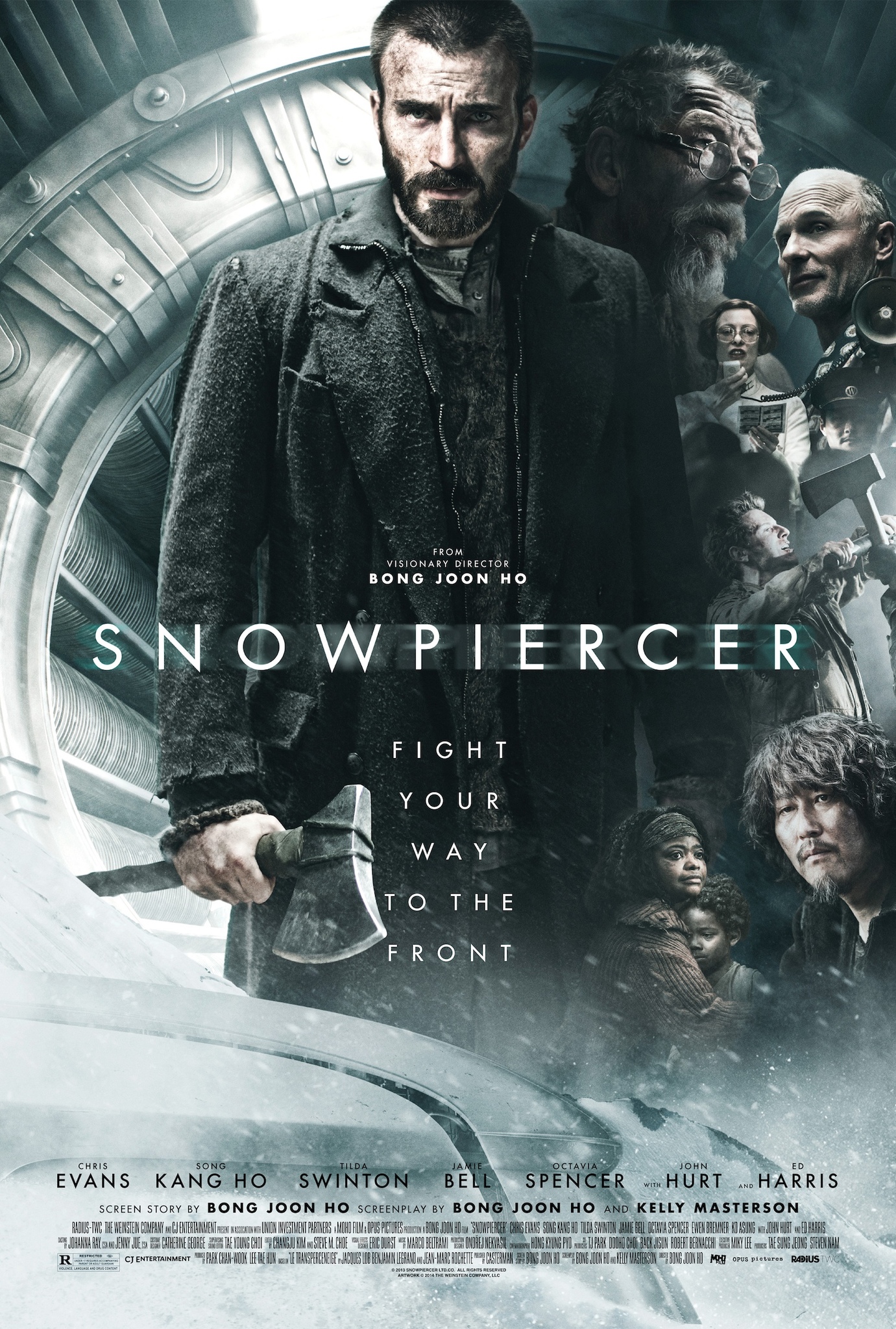
Snowpiercer
What It's About
Snowpiercer is a 2013 science fiction action film based on the French graphic novel Le Transperceneige by Jacques Lob, Benjamin Legrand and Jean-Marc Rochette. The film is directed by Bong Joon-ho and written by Bong and Kelly Masterson.
Set in 2031, seventeen years after a failed climate-change experiment covering most of the planet in ice, the film follows the passengers of the Snowpiercer, a massive, perpetually moving train that circles the globe. Class warfare, social injustice and the politics of survival play out in a microcosm of society as the train's impoverished tail-section passengers rebel against the elite of the front cars.
My Review
Overall Impression
Snowpiercer is undeniably entertaining: its high‑concept premise, intense action, and dystopian visuals grab you immediately. But beneath the spectacle lies a tangle of logical inconsistencies that pull you right out of the story. This isn't a single flaw—it's a tapestry of them, woven throughout every aspect of the film.
World‑Building and Train Mechanics
- Global Ice Age vs. Track Integrity
The film tells us that Earth is frozen solid, yet the train's tracks circle the globe without any corrosion, breakage, or maintenance issues. In reality, metal rails exposed to constant sub‑zero temperatures, shifting ice, and snow would warp, fracture, and require regular repair. Snowpiercer never explains how these repairs happen—or who performs them. - Child Labor as Mechanics
At one point, the film suggests that children service and fix parts of the train. This choice strains credibility: how do they acquire the expertise? Who trains them? Why wouldn't the ruling class employ adult engineers or automated systems? The idea of kids running complex machinery feels like a contrived attempt to heighten drama rather than a plausible detail of this dystopia.
Carriage Layout and Social Structure
- Opaque First Class Quarters
We see the cramped, grimy Poor Carriage in detail, but the luxurious upper classes remain largely off‑screen. We never glimpse their sleeping quarters, raising the question: why hide them? If the film wants to emphasize inequality, show us both sides. - Illogical Sequence of Spaces
The train's layout defies common sense. It places a dingy, drug‑fueled nightclub near the front, followed by school facilities, then spa‑like pools and greenery. Logically, you'd arrange it:
1. Poor Carriage → 2. Food & Utilities → 3. School → 4. Nightclub → 5. Luxury Amenities
And why must passengers walk through the school to reach other areas? A simple double‑deck carriage—with a top‑level walkway and bottom‑level rooms—would solve this. In the TV series adaptation, they actually use this design, proving it's not impossible.
Resource Management and Survival Logic
- A Polar Bear Ending
The climactic reveal of a polar bear outside the wreckage is meant to signal hope or menace. Some viewers argue the bear will kill the survivors; others see it as proof that life persists. Yet if a bear can survive, why can't humans? The film shows earlier escapees frozen to death, but we never see what gear they had or the exact conditions. The two final characters appear well‑equipped, suggesting better chances. - Alternate Survivors
The story implies these train passengers are the last humans alive, but that's implausible. Wealthy elites could have built hidden bunkers with heat and power. Remote communities might have found caves or geothermal springs. Snowpiercer never acknowledges these possibilities, forcing us to accept a narrative convenience over realistic world‑building.
Thematic Critique
- Class Struggle and Capitalism
The film's strongest element is its metaphor for class conflict: the rigid hierarchy of carriages, the brutality of revolution, and the moral questions around survival. Curtis's uprising from the tail section to the engine room remains a powerful image of oppressed people fighting their way to power. - Missed Opportunities
However, by ignoring basic logistics, Snowpiercer weakens its own allegory. When your metaphorical train can't plausibly run, the message derails. A deeper exploration of how this society maintains itself—who designs the pistons, who harvests the crops, how they generate electricity—would enrich the film's critique of capitalism and exploitation.
Final Thoughts
Snowpiercer is a wild ride: visually striking, thematically bold, and undeniably fun. Yet it demands a level of suspension of disbelief that borders on willful ignorance. If you're in the mood for an action‑packed dystopian fable and don't mind spotting plot holes, you'll enjoy it. But if you like your sci‑fi grounded in coherent world‑building, this train won't take you very far.
Rating: ★★★☆☆☆☆☆☆☆ (3 out of 10 stars)


